
Updates and tests in the summer
Having spent May in the Stinchar, we returned to Zurich with information, ideas, and a task - it was time to update our game.
Our changes were guided by two main factors: the needs of the organisations we’d spoken to, and the perspectives of the people we’d interviewed. In May, we’d spoken to farmers, people from village communities, anglers, local and national NGO representatives, and many others to get a picture of how different people viewed the landscape they lived and worked in. The objective was to update the model behind our game to produce not a singular and prescriptive representation of land management in the south west. Instead, we wanted to develop a model that acknowledges its complexities and trade-offs, and the fact that different interpretations of a landscape and its dynamics can all have truth and value to them.
We identified aspects that should be included to better reflect the reality in the south west, such as wind farms, commercial forestry, and more fragmented land ownership. At the same time, the feedback we got from participants of the game sessions we ran in May made clear that simplicity was a priority.With that in mind, we designed and built a new board, removed some dynamics from the game, added in others reported by interviewees, and ran tests of the game in-house. We also tested using the discourse analysis tool with the redesigned game, with the aim of capturing the hours of complex discussions that accompany a game and making them easily accessible to both participants and organisers.
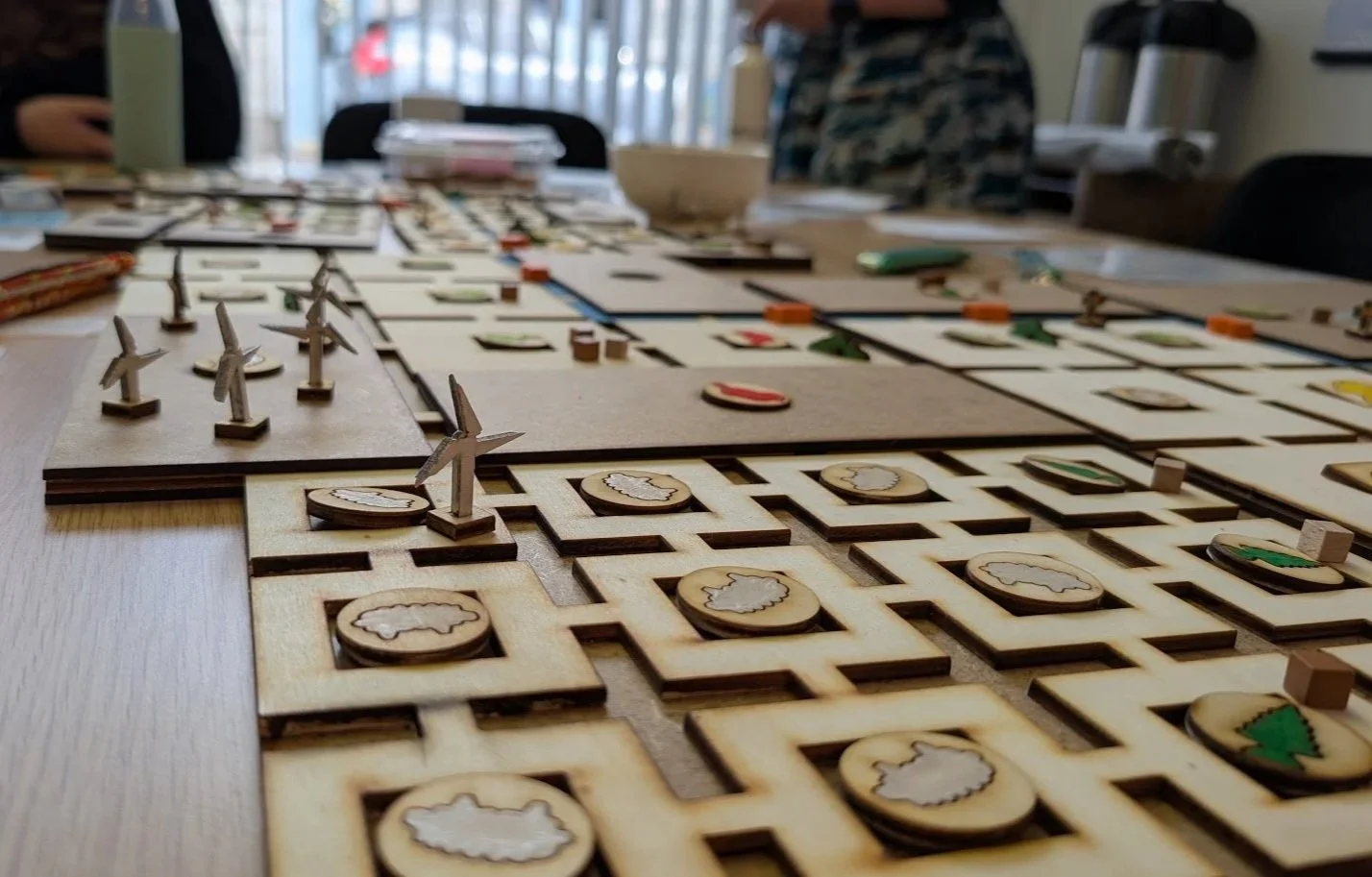
The updated Scotscape board. Image: Johanna Wierer, ETH Zurich
In late July, we were ready to test our game in three sessions. Our first game was with GSA Biosphere, our main partner for this year, who’ve closely supported us with the game development process. This time we ran the session with the Biosphere team, who provided fantastic feedback on the changes we’d made and the potential applications of the game.
Our next session was with the Glenkens Community and Arts Trust (GCAT), who’d gathered 15 members of the local community to test our game and see how they might use it. People in farming, wind, local NGOs, and forestry gave their feedback, some of whom had played the game three years ago in an earlier iteration and come back to play again!
Our last game session was with the Angus Climate Hub, supported by Bioregioning Tayside, where a fantastic group of people from a range of backgrounds including national NGOs, local groups, and local government tested and explored the game.
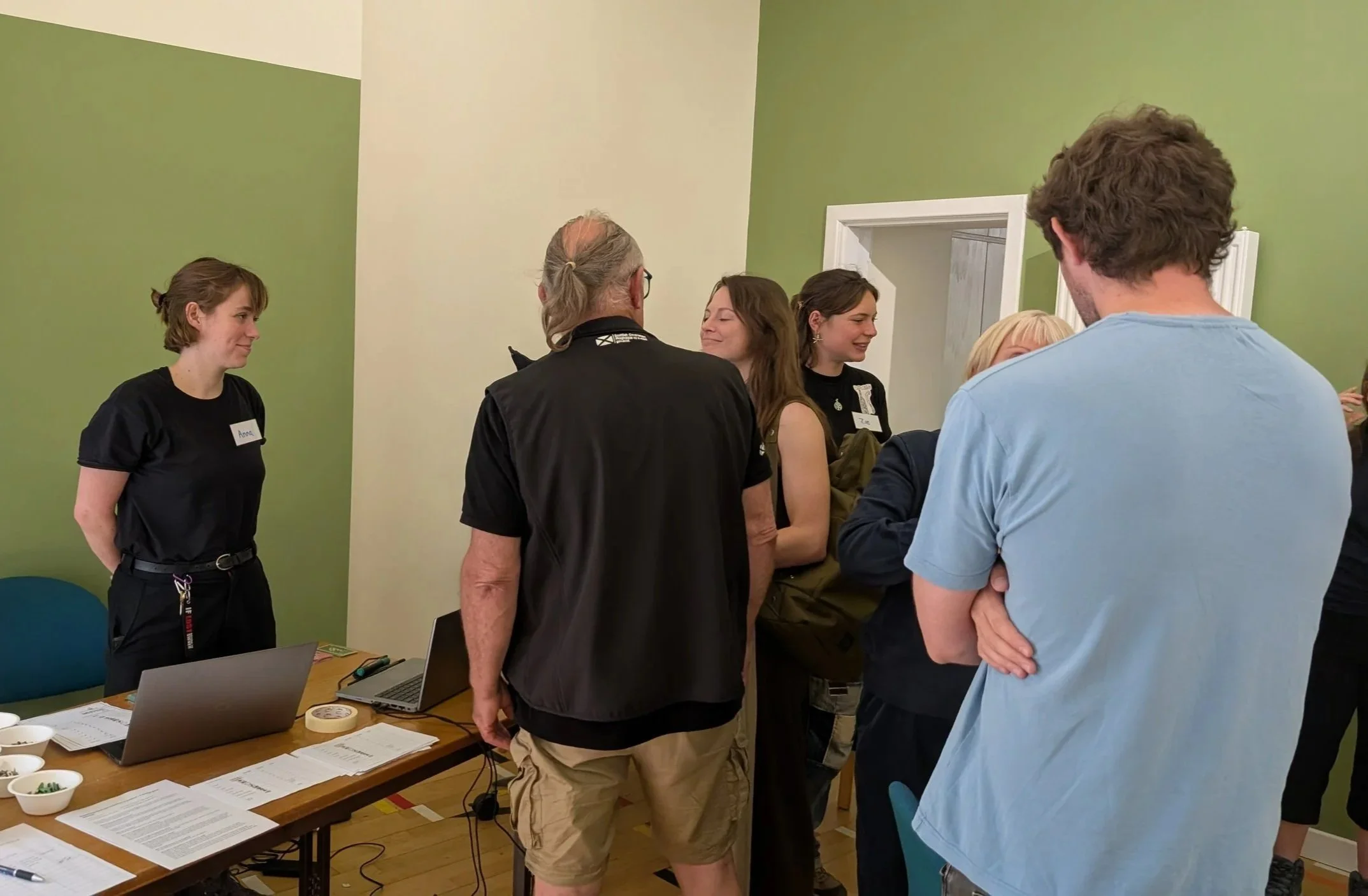
Participants and facilitators at the game session in Kirriemuir. Image: Johanna Wierer, ETH Zurich
In all three sessions, it was great to see people engage with the game and reflect on how closely it resembled reality. It sparked conversations about the challenges of farming, the influence of government subsidies, and opportunities for nature restoration. Participants’ feedback on how the game could be used put forward a range of possibilities: education and engagement, land use planning, dialogue facilitation, and more.
In the months ahead, we’ll be working to prepare the game for use with our partners, ensuring that there are clear outcomes to running the game - benefits both for the organising group and the participants.